Forrester Identifies Context Engineering As Key To Agentic AI Success
Enterprises must develop context engineering capabilities to support agentic AI, according to Forrester. This emerging discipline is crucial for AI systems to make informed decisions.
Original reporting · forrester.com
Original: “Context Engineering And ContextOps: The Missing Foundation For Scaling Agentic AI”
Read “Context Engineering And ContextOps: The Missing Foundation For Scaling Agentic AI” at Forrester →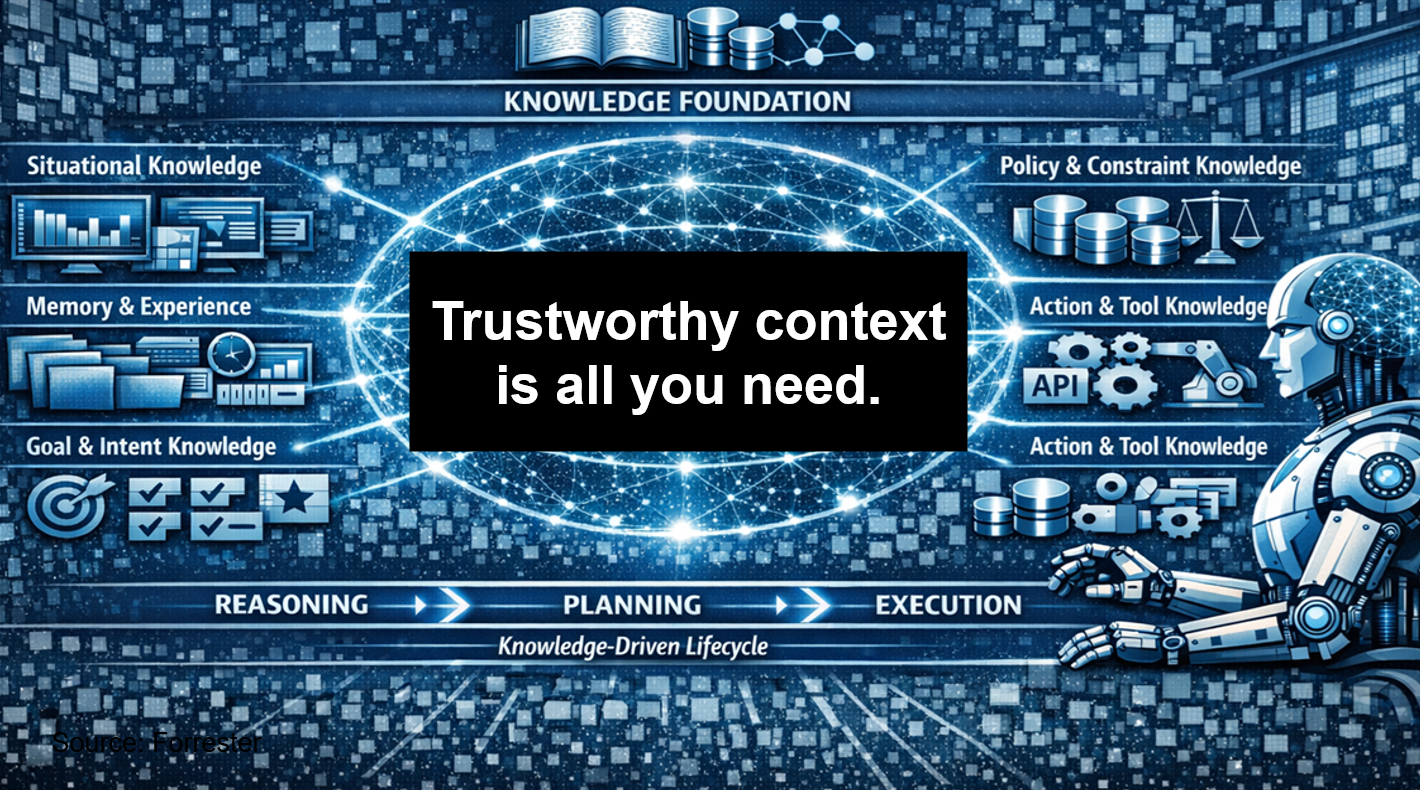
How this was written. Message Verified wrote this article with a language model from Forrester’s reporting (model: @cf/meta/llama-3.3-70b-instruct-fp8-fast); it describes that reporting rather than adding to it. The original, linked above, is the full story.
Key points from Forrester’s report
- Context engineering is a critical component of agentic AI, enabling AI systems to make informed decisions.
- Companies must develop context engineering capabilities to support their AI initiatives.
- ContextOps is essential for operationalizing, governing, and continuously improving context at scale.
- The next phase of enterprise AI will depend on a company's ability to develop a context engineering platform.
- Forrester provides strategic guidance to companies looking to build context engineering capabilities and improve ContextOps practices.
Over the past two years, companies have focused on developing AI models and infrastructure, but have often overlooked a critical component: context. Forrester reports that this lack of context has hindered the effectiveness of AI initiatives.
As AI systems become more autonomous, they require accurate and relevant context to make decisions. This context must combine business knowledge, operational state, and historical experience to enable AI systems to reason and act effectively.
Most companies are not equipped to provide this level of context, as their knowledge is fragmented across various applications and systems. Data alone is insufficient, as it only describes reality, whereas context explains and applies relevant knowledge to specific situations.
Forrester has defined context engineering as a foundational discipline for agentic AI, involving the design, orchestration, and delivery of structured context to AI systems. This discipline is distinct from prompt engineering, which focuses on instructions rather than the information and semantics that shape agent behavior.
Context engineering consists of four key elements: retrieval-augmented generation, function calls, memory management, and context models. These elements work together to provide AI systems with a coherent representation of business reality.
However, building context is only half the challenge. Companies must also operationalize, govern, and continuously improve context at scale, which is where ContextOps comes in. Forrester defines ContextOps as the operational discipline for managing context assets and flows across their full lifecycle.
The next phase of enterprise AI will depend on a company's ability to develop a context engineering platform, according to Forrester. This will require shared context services, reusable context assets, and common governance, rather than siloed implementations.
Questions and answers
What is context engineering?
Context engineering is the practice of designing, orchestrating, and delivering structured context to AI systems, as defined by Forrester.
Why is context important for agentic AI?
Context is crucial for AI systems to make informed decisions, as it provides a coherent representation of business reality.
What is ContextOps?
ContextOps is the operational discipline for managing context assets and flows across their full lifecycle, as defined by Forrester.