Manufacturers Adopt Automation And Diversify Amid Challenges
Manufacturers are turning to automation and exploring new markets as they face pressure from changing industries and technologies. This shift may bring benefits such as increased efficiency and reduced costs.
Original reporting · forrester.com
Original: “Predictions 2027: Manufacturers Remember The Basics While Looking To The Future”
Read “Predictions 2027: Manufacturers Remember The Basics While Looking To The Future” at Forrester →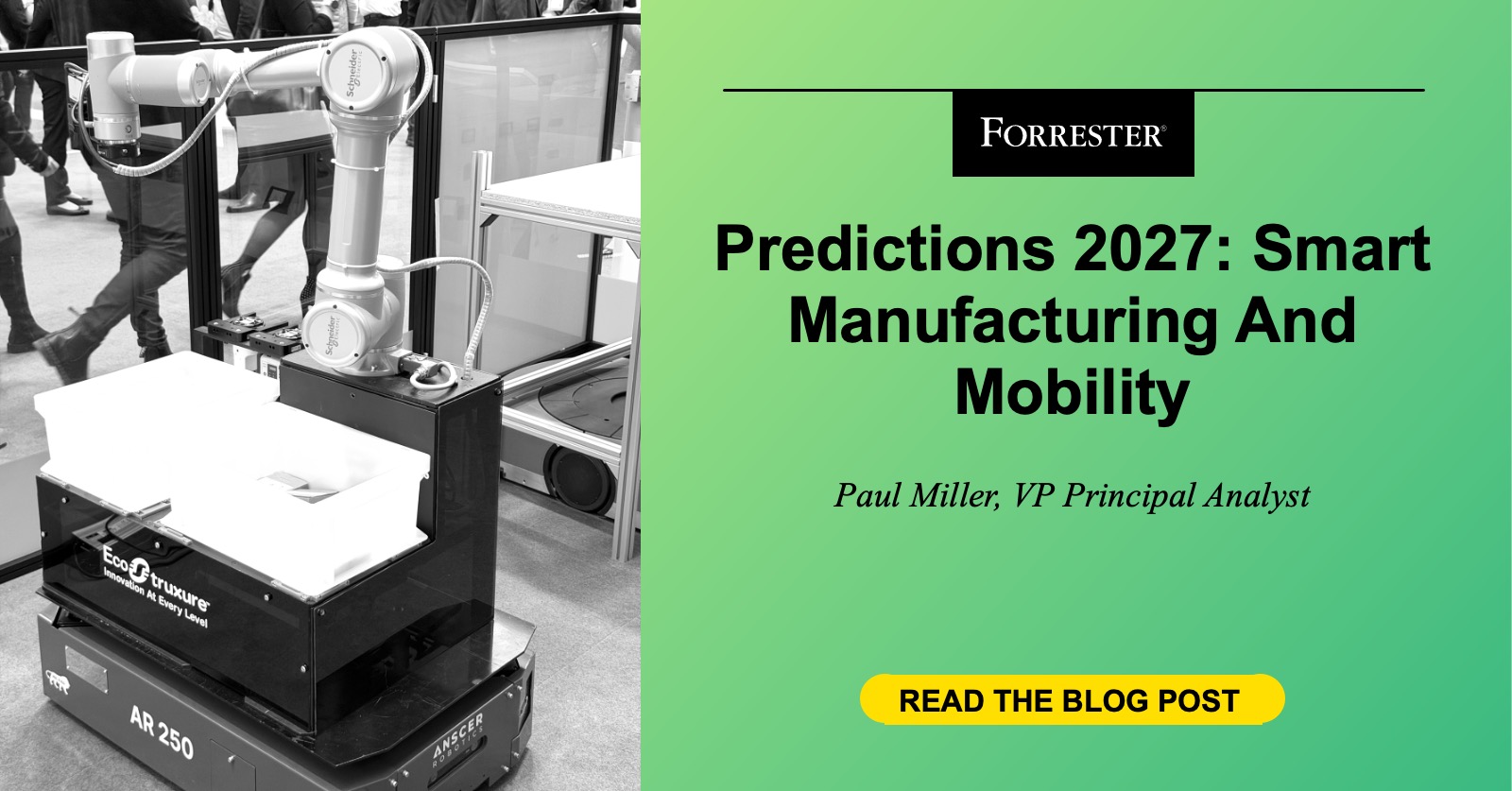
How this was written. Message Verified wrote this article with a language model from Forrester’s reporting (model: @cf/meta/llama-3.3-70b-instruct-fp8-fast); it describes that reporting rather than adding to it. The original, linked above, is the full story.
Key points from Forrester’s report
- Manufacturers are expected to adopt automation at an accelerated rate in 2027, driven by the use of physical AI.
- Companies in the automotive supply chain are diversifying into new industries in response to changing market demands.
- Many companies are lagging behind in their preparations for the potential risks posed by quantum computing.
- The use of quantum computing may have a major impact on the security of industrial machinery and other systems.
- Companies must take steps to ensure that their systems are quantum-safe and to develop plans for mitigating any potential risks.
According to Forrester, the use of physical AI is expected to accelerate the adoption of automation among manufacturers by a significant margin. This technology has the potential to make automation more adaptable and resilient. As a result, manufacturers may be able to reduce the time and effort required to deploy and scale automation.
A major trend predicted for 2027 is the diversification of companies in the automotive supply chain. These companies are facing challenges such as increased competition and shifting market demands, and are looking to expand into new industries. This move may help them to reduce their dependence on traditional markets and increase their revenue.
Forrester reported that companies such as Bosch and Schaeffler are already making moves to diversify their businesses. Bosch, for example, is generating revenue from a range of industries including consumer goods and energy. Schaeffler, on the other hand, is repositioning itself as a motion technology company and exploring new opportunities in areas such as robotics.
Another challenge facing manufacturers is the need to prepare for the potential risks posed by quantum computing. Many companies are lagging behind in their preparations, despite the fact that their systems may be vulnerable to attack. Forrester warns that this is a real and significant threat, and that companies must take steps to protect themselves.
The use of quantum computing may have a major impact on the security of industrial machinery and other systems. Companies must take steps to ensure that their systems are quantum-safe, and to develop plans for mitigating any potential risks. This may involve updating their cryptography and developing new strategies for protecting their systems.
Forrester clients can access more information about these predictions and their potential impact on the manufacturing industry. The company has released a range of resources, including a full report and a webinar, to help clients understand the trends and challenges that are shaping the industry.
In addition to the predictions outlined above, Forrester has identified several other trends that are likely to shape the manufacturing industry in 2027. These include the increasing use of automation and AI, and the need for companies to develop new strategies for managing their operations and supply chains.
Questions and answers
What is physical AI and how will it impact manufacturers?
Physical AI refers to the use of artificial intelligence in automation, and is expected to make automation more adaptable and resilient, leading to increased efficiency and reduced costs.
Why are companies in the automotive supply chain diversifying into new industries?
Companies in the automotive supply chain are facing challenges such as increased competition and shifting market demands, and are looking to expand into new industries to reduce their dependence on traditional markets and increase their revenue.
What is the potential risk posed by quantum computing and how can companies prepare?
The potential risk posed by quantum computing is that it may be able to break certain types of cryptography, leaving systems vulnerable to attack. Companies can prepare by updating their cryptography and developing new strategies for protecting their systems.