Forrester Activates Customer Advocates With Personalized Approach
Forrester helps businesses understand customer motivations to boost advocacy, according to Forrester. This approach matters because it increases customer engagement and loyalty.
Original reporting · forrester.com
Original: “Activate Advocates By Aligning Personality Profiles To Value Dimensions”
Read “Activate Advocates By Aligning Personality Profiles To Value Dimensions” at Forrester →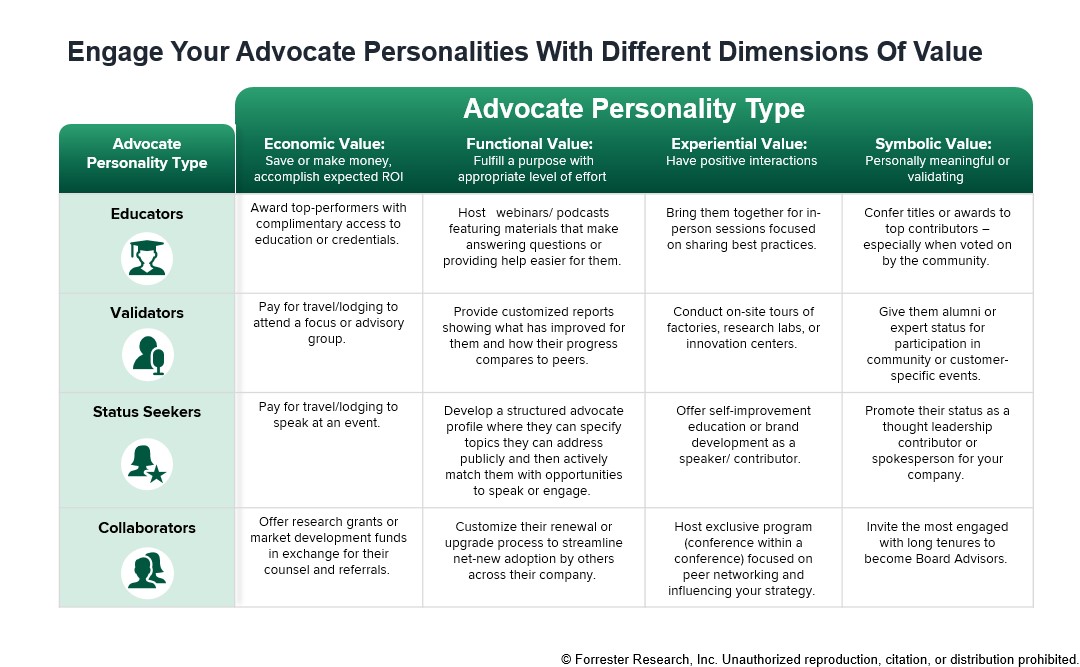
How this was written. Message Verified wrote this article with a language model from Forrester’s reporting (model: @cf/meta/llama-3.3-70b-instruct-fp8-fast); it describes that reporting rather than adding to it. The original, linked above, is the full story.
Key points from Forrester’s report
- Forrester helps businesses understand customer motivations to boost advocacy
- Customer advocates have distinct personality types, including educators, validators, status seekers, and collaborators
- Businesses must deliver value to customers upfront to encourage participation and loyalty
- Forrester's framework enables companies to create a richer and more engaging experience for their customers
- Effective customer advocacy programs require careful planning and ongoing moderation
Customer advocates play a crucial role in helping their peers achieve goals and guiding company marketing strategies. Forrester reported that businesses with successful customer advocacy programs prioritize participant value. By doing so, they create a mutually beneficial relationship between the company and its customers.
To foster strong relationships with customer advocates, businesses must understand what motivates them. Forrester suggests that developing a deeper understanding of advocates' motivations and preferences is key to encouraging their participation. This can be achieved by analyzing their behavior and interactions with the company.
Forrester's research has identified four distinct personality types among customer advocates: educators, validators, status seekers, and collaborators. Each type has unique preferences and motivations, which businesses must consider when designing engagement strategies. By recognizing these differences, companies can create more effective advocacy programs.
The value that customers derive from their interactions with a company can vary greatly depending on their personality type. Forrester recommends that businesses use a framework to determine which activities and experiences are most likely to resonate with each type. This approach enables companies to deliver value to their customers and advocates upfront.
By using this framework, businesses can create a richer and more engaging experience for their customers, which can lead to increased participation and loyalty. Forrester's approach also helps companies to develop creative engagement opportunities that cater to the diverse preferences of their advocates. As a result, businesses can build stronger relationships with their customers and encourage them to become loyal advocates.
Forrester's model for understanding customer advocates provides businesses with a valuable tool for developing effective engagement strategies. By applying this model, companies can increase customer participation, boost loyalty, and ultimately drive business growth. Forrester is available to provide guidance and support to businesses looking to implement this approach.
In the future, businesses that prioritize customer advocacy and develop a deep understanding of their advocates' motivations and preferences are likely to see significant benefits. As Forrester noted, successful customer advocacy programs require careful planning, ongoing moderation, and a commitment to delivering value to customers. By following this approach, businesses can turn their customer advocates into a valuable asset.
Questions and answers
What are the benefits of understanding customer advocates' motivations and preferences?
Understanding customer advocates' motivations and preferences helps businesses create more effective advocacy programs, increase customer participation, and boost loyalty.
How can businesses determine which activities and experiences are most likely to resonate with each customer personality type?
Forrester recommends using a framework to determine which activities and experiences are most likely to resonate with each type, enabling companies to deliver value to their customers and advocates upfront.
What is the role of customer advocates in business marketing strategies?
Customer advocates play a crucial role in helping their peers achieve goals and guiding company marketing strategies, making them a valuable asset for businesses.